Chapter 23 Pain, analgesia and anaesthesia
Introduction#
Pain may be asked as part of a viva topic or candidates may be lucky or unlucky enough to have a full 5-minute viva devoted to the topic. Pain is wellknown to appear as questions in the P art I MCQ/SBA exam.
This viva can be awkward, in real life is best left to the anaesthetists.
Again, similar to genetics, the idea is to score a basic 6 for any question asked. Anything else is a bonus.
One word of caution with C list category topics.
Section 5 of the Trs+Orth basic science syllabus can be loosely regarded as the pain section.
1. Anaesthesia – principles and practice of local and regional anaesthesia and principles of general anaesthesia.
2. Pain management programmes and management of complex regional pain.
3. Pain and pain relief.
4. Behavioural dysfunction and somatization.
If all else fails, try to produce a list of potential pain questions previously asked and work through these in a study group.
Structured oral examination question 1#
Pain
What is pain?
An unpleasant sensory and emotional experience associated with actual or potential tissue damage. (International Association of the Study of P ain (IASP)).
Your patients have pain. You see many patients with pain. How do you assess pain?
Pain must be assessed using a multidimensional approach, with determination of the following: Chronicity. Aetiology of pain, if identifiable. Mechanism of injury, if applicable. SOCRATES pain mnemonic: Site – where is the pain? Associations – impact on QOL: social, emotional family, financial. Score 7/8 candidate Pain scales can be useful.
1. Single dimensional scale
Measures a single dimension of pain, usually pain intensity. Useful in acute pain where the aetiology is clear.
2. Multidimensional sc ale
the impact that pain is having on apa tien t’s activity or mood Useful incomplex or persistent acute or chronic pain.
Visual analogue pain scales are easy for patients to use. Can be either continuous or discrete.
What is the difference between acute and chronic pain?
With acute pain there is pain of recent onset and probably limited duration. It usually has an identifiable temporal and causal relationship to injury or disease.
Anything newly introduced for acute postoperative pain relief in orthopaedics?
I am not sure what you mean.
For lower limb arthroplasty surgery?
Adductor canal block. For many years a femoral nerve block (FNB) was used as the main peripheral nerve block for postop analgesia following TKA. Adductor canal block is a pure sensory nerve block for postop analgesia. The block is performed under ultrasound guidance. This block seems to work well without causing quadriceps weakness. The candidate should have expanded on their answer if able to do so.
That’s for knee replacements. Anything else?
Stop before you block.
OK, tell me about this.
This is a national patient safety initiative aimed at reducing the incidence of inadvertent wrong-sided nerve block during regional anaesthesia.
What is a never event?
The National Patient Safety Agency (NPSA) describes a ‘never event’ as a serious, largely preventable patient safety incident that should not occur if the available preventative measures have been implemented.
Have you heard of the sufentanil sublingual tablet system?
Its use is restricted to acute moderate to severe postoperative pain, in the hospital seting and for a maximum duration of 72 hours. It is a user-friendly device that is especially useful inpatients for whom improved mobility is an advantage.
What about day-case lower limb joint replacement? CANDIDATE 1 : In my hospital we don’t have the set up for this.
CANDIDATE 2: Enhanced recovery is multidisciplinary standardized peri operative care aimed at early mobility, discharge and return to normal life with both reduced morbidity and potentially mortality. The strategy has fourstrands: 1. 2. Reducing the physical stress of the operation. 3. Decreasing postoperative discomfort. 4. Improving postoperative mobility. There is no single protocol for all hospitals and each centre must develop its own ERAS (enhanced recovery after surgery) programme based on its own strengths and limitations. Ideally, patients should be fully optimized with well-controlled systemic disease and be well motivated to complete the programme. In my hospital we use ropivacaine, ketorolac (NSAID) 30 mg and morphine 5 mg.
You have mentioned ERAS, but whatabout day-case surgery? CANDIDATE 2: This would involve preoperative patient education and motivation for the programme. Anaesthesia should be standardized and would typically involve a low-dose spinal and sedation or light GA, local anaesthetic infiltration, IV paracetamol and use of tranexamic acid. Peri operative measures would include adequate postop analgesia, physiotherapy, a blood transfusion protocol, standardized discharge medications and arrangements for a nurse specialist to check on the patient to make sure they are safe when discharged. Anything else?
Discharge hurdles would include physiotherapy (mobility, stairs, hip precautions radiographs and dry wound.
Structured oral examination question 2#
Managing neuropathic pain
What do we mean by neuropathic pain?
Neuropathic pain is defined by the IA SPas ‘pain initiate dor caused by a primary lesion or dysfunction in the nervous system’.
How is neuropathic pain different to nociceptive pain?
Nociceptive pain is caused by actual tissue damage whereas neuropathic pain is produced either by damage to or pathological change in the peripheral or central nervous system.
And?
For example, there is: A lower threshold for activation of injured primary afferents causing ectopic discharges from the injured nerve or the dorsal root ganglion. There is downregulation of dorsal horn opioid receptors and reduced opioid sensitivity .
Can you give examples of neuropathic pain?
Common neuropathic conditions affecting the peripheral nervous system include peripheral diabetic neuropathic pain (PDNP), postherpetic neuralgia (PH NAIDS polyneuropathy, cervical or lumbar radiculopathy, mechanical compression such as entrapment syndromes (e.g. carpal tunnel syndrome), phantom limb pain after amputation trigeminal neuralgia and traumatic nerve injury.
How does neuropathic pain present?
Patients usually complain of dysaesthesias (unpleasant and strange sensations in the skin (tingling , pins and needles)), deep-seated gnawing pain, and abnormal thermal sensations (burning , on fireLess commonly, paroxysmal pains such as shooting , stabbing, or electric shocks.
How do we treat nerve pain?
Nerve pain can be difficult to treat, as standard treatment with conventional analgesics does not typically provide effective relief of pain. I would use a step-wise ladder: 1. Non-opioid analgesic/basic analgesia paracetamol 1 g QDS. Unlike most other types of pain, neuropathic pain doesn’t always respond well to these common painkillers. 2. Tricyclic antidepressant (TCA). TCAs block thereup take of noradrenaline and serotonin. The most common adverse events include sedation, anticholinergic side effects (namely dry mouth, constipation and urinary retention) and orthostatic hypotension. They are associated with cardiac toxicity and must be avoided in the elderly and in those with cardiac pathology. 3. Anticonvulsant gabapentin. Proposed mechanism of action is the interaction with the v oltage-gated calcium channel alpha-2-delta subunit. 4. Trama dolCan be used to treat resistant neuropathic pain. 5. Secondary pain care referral.
Structured oral examination question 3#
WHO pain ladder
Your clinic patient has osteoarthritis of the knee Referred in for a knee replacement, but symptoms aren’t severe enough yet for surgery. How would you control his knee pain?
I would prescribe him morphine.
Are you sure?
Yes. Morphine is a good choice for pain control.
What is the WHO pain ladder? CANDIDATE 1: I have heard of it, but I am not sure. CANDIDATE 2: The WHO pain ladder was originally introduced as a framework for treating cancer pain in 1986 with modifications in 1997. Treatment of pain should begin with a non-opioid medication. If the pain is not properly controlled, one should then introduce a weak opioid. If the use of this medication is insufficient to treat the pain, one can begin a more powerful opioid. One should never use two products belonging to the same category simultaneously. The analgesic ladder also includes the possibility of adding adjuvant treatments for neuropathic pain or for symptoms associated with cancer. The WHO guidelines can be used for all patients with either acute or chronic pain who require analgesia. Although there has been a number of criticisms due in part to omissions, developments of new techniques and medications, the WHO treatment guidelines are still considered a valid tool to use. What are the five recommendations of the WHO ladder? CANDIDATE 2: 1. Analgesics should be administered orally, wherever possible. 2. Analgesics should be given at regular definite intervals. 3. Analgesics should be prescribed according to pain intensity. 4. The dosing of medication should bea dap ted to the individual. The correct dosage is one that will allow adequate pain relief. 5. The patient should be given all the necessary information about when and how to administer the medication.
Structured oral examination question 4#
Complex regional pain syndrome
You meet apa tien t in clinic complaining of severe pain in a wrist preventing them from using it normally after a fracture. It is unrelenting pain keeping them awake at night, associated with swelling, temperature and skin changes, and light touch provokes severe pain. What are your thoughts?
This is a giveaway diagnosis of CRPS. These features are very suggestive of complex regional pain syndrome.
The patient is a female, 43 years old, right-hand dominant secretary who sustained a straighfoorward undisplaced fractured radius 10 weeks ago after a fall. Managed conservatively in a Colles’ cast.
I would order AP and lateral radiographs of the wrist and look to see if diffuse patchy osteopenia was present.
What is complex regional pain syndrome?
Complex regional pain syndrome is a syndrome associated, severe pain in a distal limb.
How is it diagnosed? CANDIDATE 1: Diagnosis is based on clinical history and examinations. Investigations can be used as adjuncts.
This is a score 5/6. CANDIDATE 2: Diagnosis is based on clinical history and examinations. Investigations can be used as adjuncts. However, it is very much a diagnosis of exclusion.
Any other differentials you need to consider?
Diabetic polyneuropathy may also present with pain, skin colour changes and motor deficit.
Do you know any criteria?
The Budapest Criteria (specificity 0.69) allow a clinical diagnosis to be made on the basis of a combination of symptoms and signs seen in four clinical categories.
The patient has continuing pain that is disproportionate to any inciting e vent.
The patient has at least one sign in two or more categories below.
The patient reports at least one symptom in three or more categories below.
No other diagnosis can better explain the signs or symptoms.
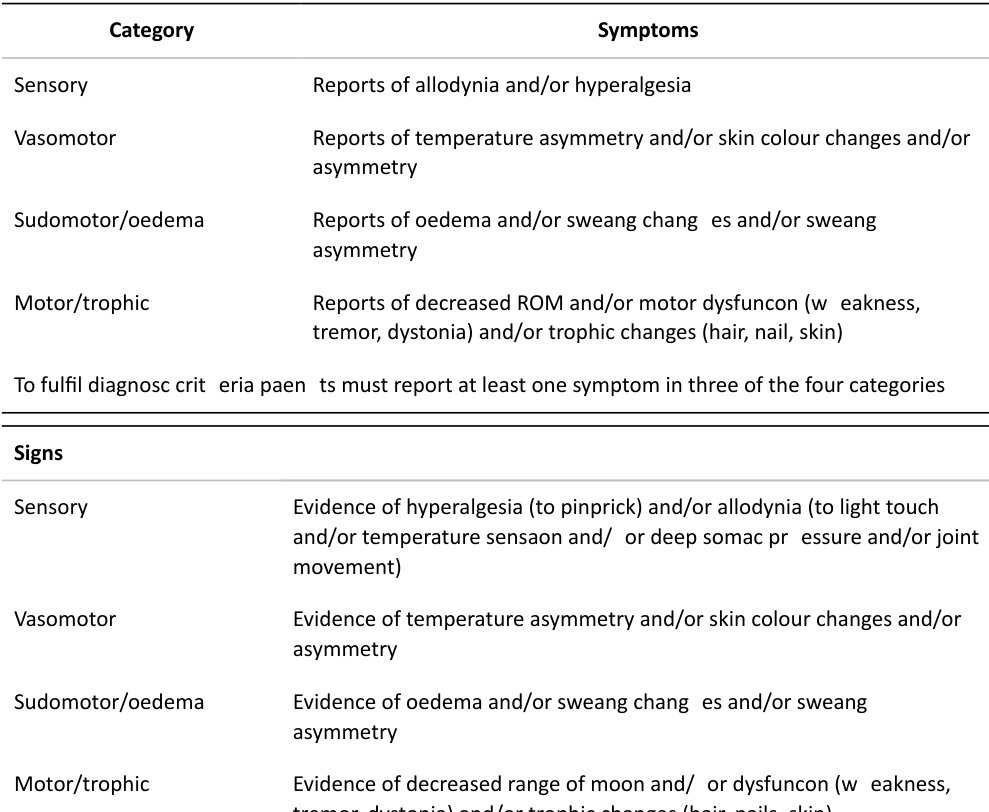
Must display ≤ 1 sign at time of evaluation in ≥ 2 of the categories.
What is the natural history of CRPS?
After a year, around half of patients affected willfully recover while the other half may complain of some residual stiffness and pain.
What is the pathophysiology of CRPS?
It is thought that CRPS develops when persistent noxious stimuli from an injured body region leads to peripheral, hyperalgesia.
What do you mean by a noxious stimulus?
This is a stimulus that is damaging to normal tissues.
What is a nociceptor?
This is a receptor preferentially sensitive to a noxious stimulus ort o a stimulus which would become noxious if prolonged.
How are nociceptors activated?
These substances influence the degree of nerve activity and intensity of the pain sensation.
What are the current approaches to management? CANDIDATE 1: A recent paper demonstrating le vel I evidence looked at the use of antioxidant vitamin C. A dose of 500 mg a day for 50 days was shown to reduce symptoms of CRPS.
CANDIDATE 2: There are several management options which would include: Physiotherapy. Nerve stimulation. Regional nerve blocks.
What pharmacological management? CANDIDATE 2 : Drugs used include calcitonin, bisphosphonates, steroids and gabapentin. Oral and intravenous biphosphonates, but not calcitonin, have been shown to decrease pain and swelling and increase range of motion in patients with CRPS. A short course of oral steroids may be beneficial but limited evidence exists for the use of gabapentin. What about physiotherapy? CANDIDATE 2 : Although we generally refer patients with CRPS to physiotherapy the evidence for its effectivenes sis unclear. It may improve ROM of the affected limb but does not affect pain. What about regional nerve blocks?
CANDIDATE 2, but the evidence for improved final outcome is poor.
How do we minimize the risk of CRPS occurring?
Patient risk factors would include complex pain issues pre-surgery, such as if the patient was on lots of pain medication such asg abapentin, codeine or morphine-based tablets before surgery. Both patient and surgical risk factors for CRPS would mean being proactive preoperatively perhaps starting them on vitamin C prophylactically and thinking about regional or epidural anaesthesia rather than a general anaesthetic.
Structured oral examination question 5#
Intravenous regional anaesthesia (Bier’s block)
What are the indications for use of a Bier’s block?
Mainly for manipulation of wrist fractures in A&E.
What are the contraindications to Bier’s block?
This mainly relates to tourniquet use. Absolute contraindications include: Allergy to local anaesthetic. Severe hypertension (SBP > 200 mmHg). Compartment syndrome. No IV access on affected hand and other limb. Children (< 10 years).
Anything else?
Paget’s disease (local anaesthetic may spread to the systemic circulation via venous channels in bone).
What local anaesthetic is used?
0.5% Prilocaine. A 70 kg patient gets 210 mg (42 ml) 0.5% prilocaine.
What about cuff deflation?
Deflate the cuff briefly (for 5–10 s) then reinflate. This allows some of the local anaesthetic in to the systemic circulation a t short intervals to avoid local anaesthetic toxicity from large amounts of local anaesthetic being released all at once.
Why all this protocol?
After 20 minutes, 30% of the injected drug is fixed within the tissues and is unavailable for immediate release into the systemic circulation.
What are the dangers of a Bier’s block?
Major complications include nerve injuries, anaphylaxis, methaemaglobinaemia seizures, arrhythmias, cardiac arrest and death. Tourniquet pain, rash and thrombophlebitis.
How do you recognize prilocaine toxicity?
Symptoms include dizziness, restlessness, anxiety, perioral tingling , metallic taste, altered mental status, muscle twitching and seizures.
What is a double tourniquet?
The double tourniquet is used to increase safety and to reduce tourniquet pain in the awake patient.
Yes, but what do we mean by the double tourniquet method?
Step 2: INFLATE proximal/top cuff of tourniquet to 100 mmHg above the patient systolic blood pressure.
Step 3: After 10 min INFLATE boft om cuff of the tourniquet. Then ONLY AFTER THE BOTTOM CUFF IS
FULLY INFLATED, DEFLATE THE TOP CUFF. The result is that the BOTTOM tourniquet is over a now anaesthetized area of arm.
Step 4: After 30 min from injection deflate theb oft om/distal cuff of the tourniquet.
It is important that there is always at least one tourniquet cuff inflated for the full 30 min from injection of priloc aine.
There has been a prolonged period of icy weather at your local hospital and the trauma list is overloaded with cases. The orthopaedics service manager has called you into their office and asked if you would agree to the temporary introduction of Biers block use in casualty for distal radius fractures. This is to free up more trauma list time. What are your thoughts?
Most wrist fractures managed on a trauma list usually require either ORIF or K-wire fixation rather than just manipulation. I would worry about the risk of fracture re-displacement with just simple manipulation and application of a moulded c ast. If there is a regular list of Bier’s block cases taking place in casualty and working well then it may simply be a case of reviewing practice and auditing procedures to ensure optimal patient selection, patient care and clinical governance. My own hospital does not have a Bier’s block list for Colles’ fractures. There is a move by anaesthetists to do a brachial plexus block (axillary approach) instead of a Bier’s block for procedures in the forearm.
What do you want to know?
We would need to decide if the service was A&E-led, orthopaedic-led or if a combined approach was taken. We would have to ensure staff had the necessary training. Protocols and procedures would need to be put in place.
Cases that clearly need ORIF should be identified and we should avoid Bier’s block use.
It seems like a lot of extra work for a temporary fix of lack of trauma theatre time.
Tourniquets can fail and release toxic doses of local anaesthetic in to the systemic circulation, the reis a risk of methaemoglobinaemia occurring and there are better methods to anaesthetize a limb.
It can be difficult to decide which way to go with these types of questions, especially if you are not very familiar with the procedure.
No free theatre time is a vailable.
It is perhaps more suited for a consultant interview, as this type of question is difficult for examiners to differentiate between the different scoring marks.
Structured oral examination question 6#
Pain
Three mechanisms need to be mentioned: 1. Segmental inhibition system (gate theory). 2. Opioid system. 3. Descending inhibitory system.
What is the gate theory of pain (segmental inhibition system)?
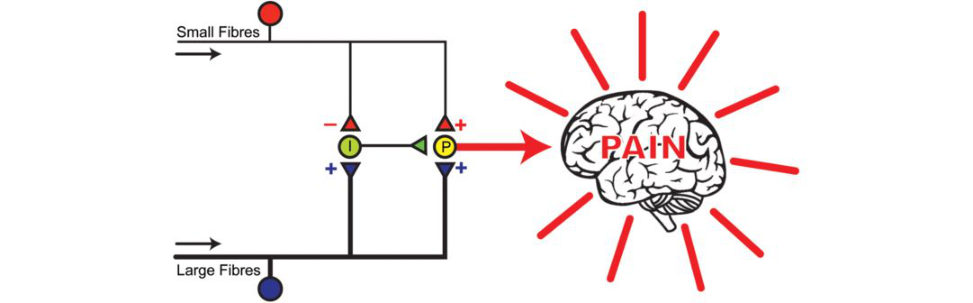
The theory is easier to explain by drawing a diagram (Figure 23.1). Synapses between nociceptor fibres (Aδ/Type C) and dorsal root ganglia can be diminished or blocked by an inhibitory neuron (substantia g elatinosa) within the spinal c ord. The inhibitory neuron is activated by Aβ/Type A fibres (light touch, large diameter). Without any stimulation, both large and small nerve fibres are quiet and the inhibitory interneuron (I) (substantia g elatinosa) blocks the signal in the projection neuron (P) that connects to the brain. With pain stimulation, small nerve fibres become active They activate the projection neurons (P) and block the inhibitory interneuron (I).
How does this explain the action of transcutaneous electrical nerve stimulation (TENS) on pain?
The development ofTENS was the result of stimulating large A fibres that stimulated the inhibitory interneuron (substantia g elatinosa) that blocked the central pain stimulators.
Any other mechanisms of pain?
The opioid system.
OK, what is this?
Opioid derivatives are powerful analgesics (morphine, diamorphine, codeine). The peptides modulate nociceptive input in two ways: 1. 2. Open potassium channels, which hyperpolarize neurons inhibiting excitatory action potentials. Systemically administered opioid analgesics can bind to the opioid receptors and modulate pain transmission.
Anything else?
Descending inhibitory system (adrenergic and serotoninergic): From the periaqueductal grey matter and the rostral medulla descending nerve fibres can modulate the ascent of nociceptor information a t the dorsal root ganglia.
Figure 23.1 Gate theory of pain. I, ‘Inhibitory Interneuron’ (substantia g elatinosa); P , ‘Projection Neuron’; –, inhibition (blocking); +, excitation (activation ).
Structured oral examination question 7#
Pain pathways
What about primary afferent fibres?
There are three main types of afferent fibre (Table 23.1). Sensory (Aβ) fibres are highly myelinated and of large diameter, therefore allowing rapid signal conduction. The y have a low activation threshold and usually respond to light touch. Under pathological conditions the y may become hyperexcitable, leading to stimuli that would usually elicit sensations of tactile t ouch causing pain. Alpha delta fibres (Aδ) are lightly myelinated and smaller diameter, and hence conduct more slowly than Aβ fibres. Group C nerve fibres are unmyelinated and are also the smallest type of primary afferent fibre.
What about pain afferent fibres?
There are two main types of nociceptive nerve fibres: Aδ and C fibres. Aδ fibres transmit rapid, sharp, localized pain. C fibres transmit slow, diffuse, dull pain.
What about the lateral spinothalamic pathway (Figure 23.2)?

GABA, glycine, serotonin, norepinephrine, dopamine and acetylcholine have an inhibitory effect on spinothalamic tract neurons, whereas glutamate has an excitatory role.
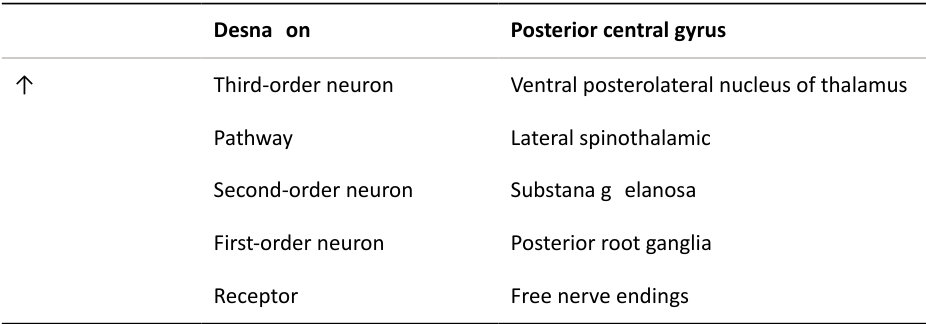
The first-order neuron delivers sensations to the CNS: the cell body is in the dorsal root ganglion.
The second-order neuron: an interneuron with the cell body in the spinal cord or brain.
The third-order neuron: transmits information from the thalamus to the cerebral cortex (Figures 23.3 and 23.4).
Table 23.1 Primary nerve fibre afferents.
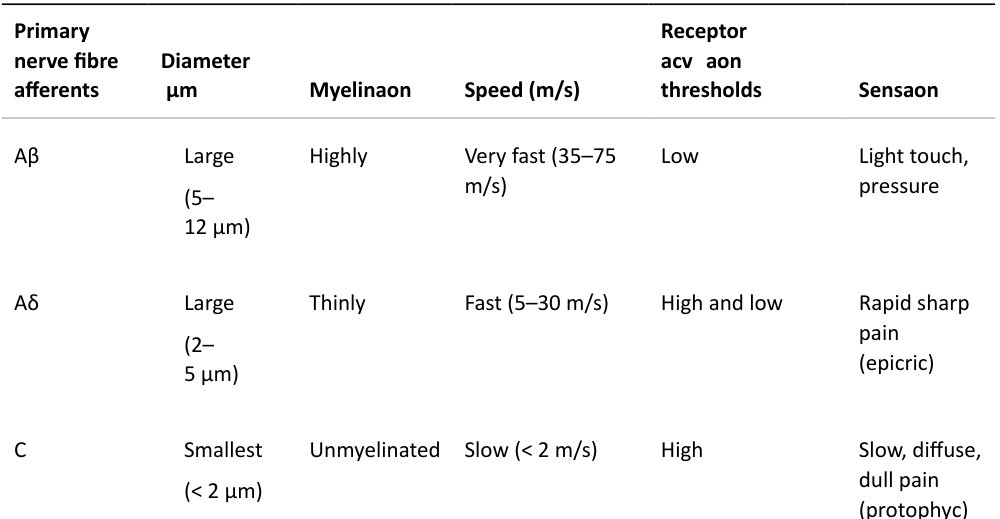
Figure 23.2 Lateral spinothalamic pathway.
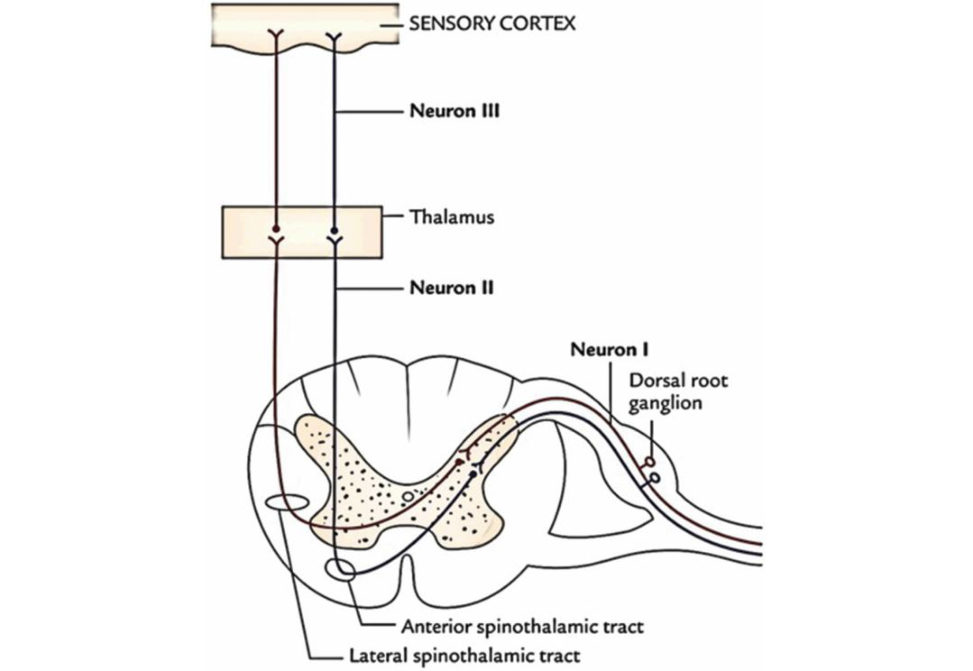
Figure 23.3 Spinothalamic tract.
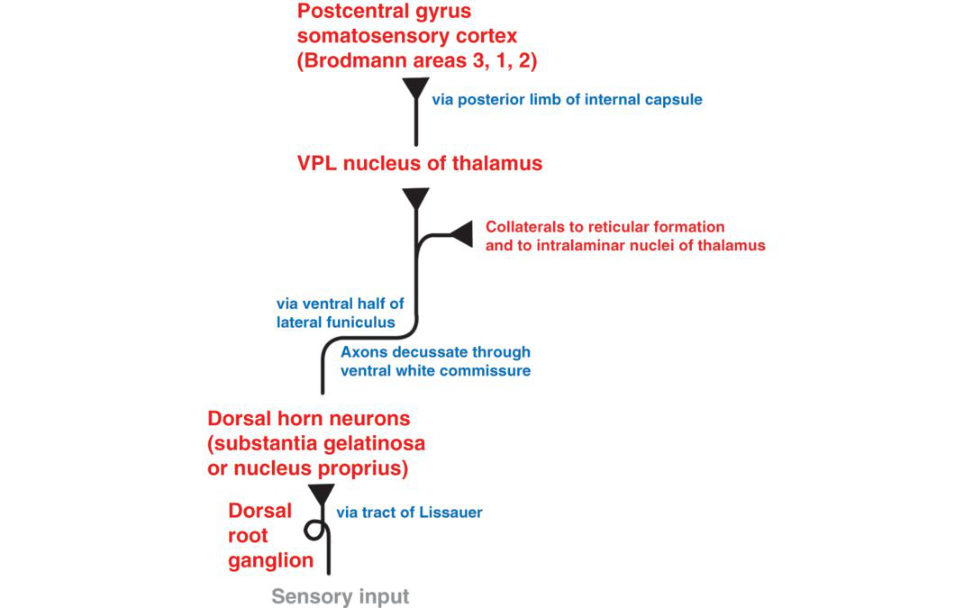
Figure 23.4 Spinothalamic tract. Candidate drawing.
First-order neuron
Aδ and C primary afferent nerve fibres have cell bodies in the dorsal root ganglia and terminate in the dorsal horn of the spinal cord.
The dorsal horn of the spinal cordis the site where the primary afferent fibres synapse with second-order neurons.
The dorsal horn is divided into six laminae (called Rexed laminae) responsible for processing sensory information, has an important role in the modulation of pain signals ( Figure 23.5).
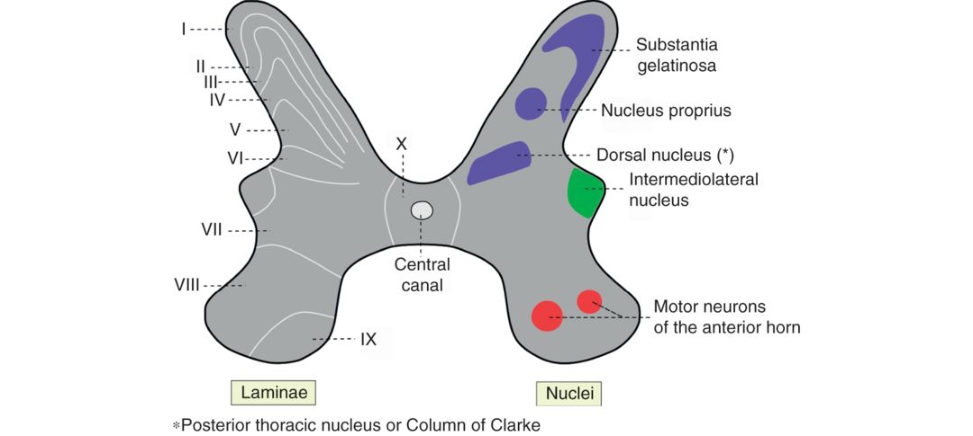
Figure 23.5 Rexed laminae.
Lamina II is known as the substantia gelatinosa and this extends from the trigeminal nucleus in the medulla to the filum terminal eat the caudal end of the spinal cord.
C fibres terminate in lamina II and Aδ fibres terminate in laminae I and V.
They give off collateral branches to the dorsal horn which terminate in several laminae (III–V). They also synapse directly with terminals of unmyelinated C fibres in lamina II.
Laminae II and V are important areas for the modulation and localization of pain.
Second-order neurons
Second-order neurons ascend to higher centres via the contralateral spinothalamic and spinoreticular tracts, which are located in the anterolateral white matter of the spinal cord.
Third-order neurons
The tertiary neurons in the ventral posterolateral nucleus of the thalamus.
Axons from these thalamic neurons follow the thalamic radiations to terminate in the primary somatosensory cortex (Brodmann’s areas 3.
What do you mean by nociceptors?
Nociceptors are sensory receptors for pain. Nociceptive fibres do not have specialized structures (such as Pacinian or Messner corpuscles) at their endings. Instead, they have what are known as free (naked) nerve endings that form dense networks with multiple branches. These substances influence the degree of nerve activity and intensity of the pain sensation.
Structured oral examination question 8#
Local anaesthetic
Local anaesthetics are important in orthopaedics. What do you know about them?
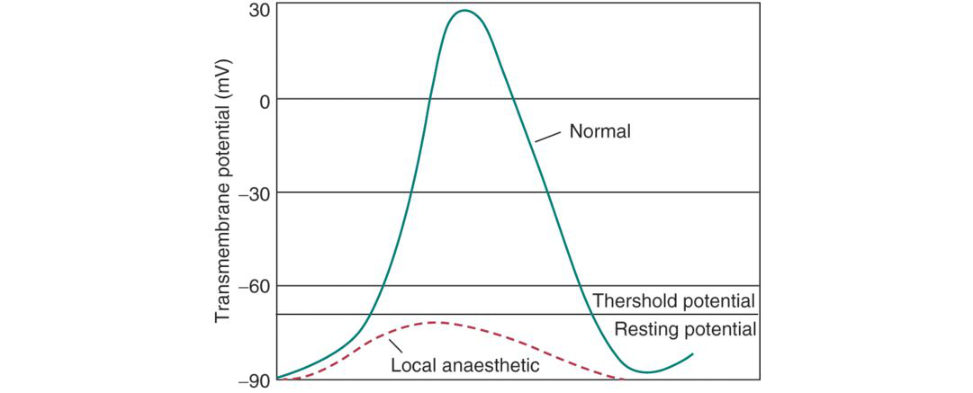
All local anaesthetics produce their effects by blocking the transmembrane pore of sodium-gated voltage channels. This prevents depolarization of the nerve cell and propagation of the action potential down the nerve (Figure 23.6). Protein binding for the longer-acting agents, i.e. bupivacaine and ropivicaine, is 95%; this is compared to 65% for lidocaine, a shorter-acting drug. Local anaesthetics block conduction in the following order: small myelinated axons, unmyelinated axons and large myelinated axons. As such, nociceptive transmission in Aδ and C fibres is blocked first and large-diameter myelinated motor fibres last.
Tell me more about how they work.
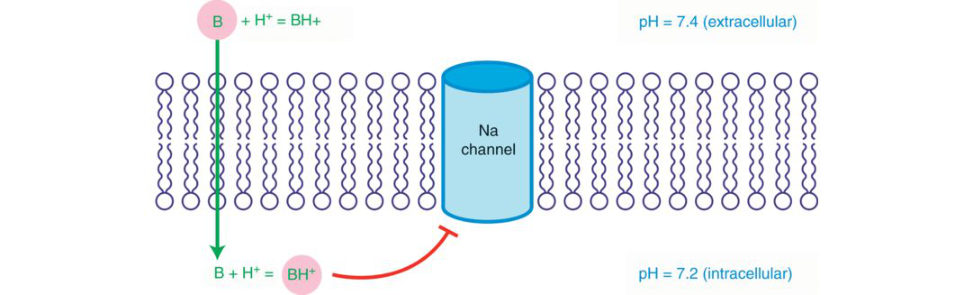
Local anaesthetics act by inhibiting sodium through sodium-specific ion channels in the neuronal cell. The y interact with a receptor within the voltage-sensitiv e Na+ channel and raise the threshold of opening the channel (Figure 23.7). This could easily be asked in the basic science nerve section on action potentials as a sc ore 7/8 question.
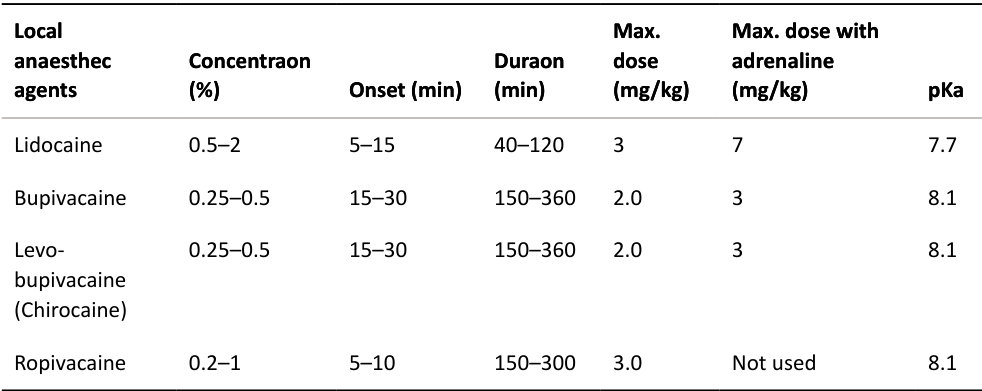
What are the commonly used local anaesthetics and their classes ( Table 23.2)?
1. Amides. Longer-acting. Metabolized by liver enzymes and excreted in urine.
2. Esters. Short-acting , metabolized in the plasma and tissue fluids by a cholinesterase enzyme and excreted in urine.
Amides are more commonly used, i.e. lidocaine, prilocaine, bupivacaine, levo-bupivacaine, ropivacaine.
Esters, e.g. cocaine, chlorprocaine and benzocaine, are now rarely used.
All the amides have an ‘I’ before the ‘caine’.
What determines the onset and potency of different local anaesthetics?
The activity of local anaesthetics is strongly pH-dependent. All local anaesthetics are weak bases which exist in two forms: ionized (BH+) and unionized (B).
Figure 23.6 Local anaesthetics slow the rate of depolarization of the nerve action potential such that the threshold potential is not reached. As a result, an action potential cannot be propagated in the presence of local anaesthetic, and conduction blockade results.
Figure 23.7 Mode of action of local anaesthetics: Na-channel blocker.
Table 23.2 Most commonly used local anaesthetics with their maximum doses and duration of onset and action.
pKa – pH = log [BH+]/[B].
How may the pKa of a local anaesthetic influence its speed of onset?
The pKa of a local anaesthetic determines the amount which exists in an ionized format any given pH. At physiological pH (7.4) all local anaesthetics are more ionized than unionized (as all the pKa values are greater than 7.4). However, the proportions vary between the drugs: lignocaine has a pKa of 7.9 and is approximately 25% unionized at p. 7.4. Bupivacaine has a pKa of 8.1 and hence less of the drug is unionized at p. 7.4 (about 15%).
What about potency?
The aromatic ring structure and hydrocarbon chain length of a particular local anaesthetic determine the lipid-solubility of the drug and hence its potency. Potency ∝ effect/dose Potency increases with increased lipid-solubility, which is related to hydrocarbon chain length.
What about duration of action?
Lignocaine: 65% protein-bound.
Bupivacaine: 95% protein-bound.
As such, bupivacaine will have a longer duration of action than lignocaine .
Lipid-solubility is the second leading determining factor, increased lipid solubility = longer duration of action.
Why do we avoid local anaesthetics use with abscess surgery?
2. Infection is often associated with localized increased blood supply and hence more anaesthetic may be removed from the area before it can affect the neuron.
You have infiltrated the skin and local tissues for a carpal tunnel release and used the maximum amount of local anaesthetic permift ed, but the local anaesthetic doesnt seem to be working. What are your thoughts?
I wouldn’t inject more than the recommended dose of local and would consider using a GA instead assuming the patient was fully fasted and there was an anaesthetist available to do this in a safe and timely manner .
Why may levobupivacaine or bupivacaine be preferred for use as a local anaesthetic compared to lignocaine?
less vasodilation, have a longer duration of action, for postoperative analgesia.
What are the complications from local anaesthetics?
Complications are frequently associated with errors of dose or intravenous administration. Complications are related to membrane destabilization of cells. An anaphylactic reaction can rapidly lead to a life- threatening condition duet o airway passage obstruction in association with laryngeal oedema and needs immediate treatment.
Pain at injection – many factors. This can be avoided by a slower injection. A void aggressive, rough insertion of a needle.
Neurological effects are usually witnessed first followed by cardiovascular collapse. Cardiac monitoring is mandatory, as arrhythmias require urgent treatment.
The addition of adrenaline to local anaesthetics should not be used on tissues with end arteries , i.e. digit and penis, as the induced vasoconstriction may result in tissue ischaemia.
Structured oral examination question 9#
General anaesthesia
Anaesthesia gas machine laminated photo is shown to the candidate (Figure 23.8).
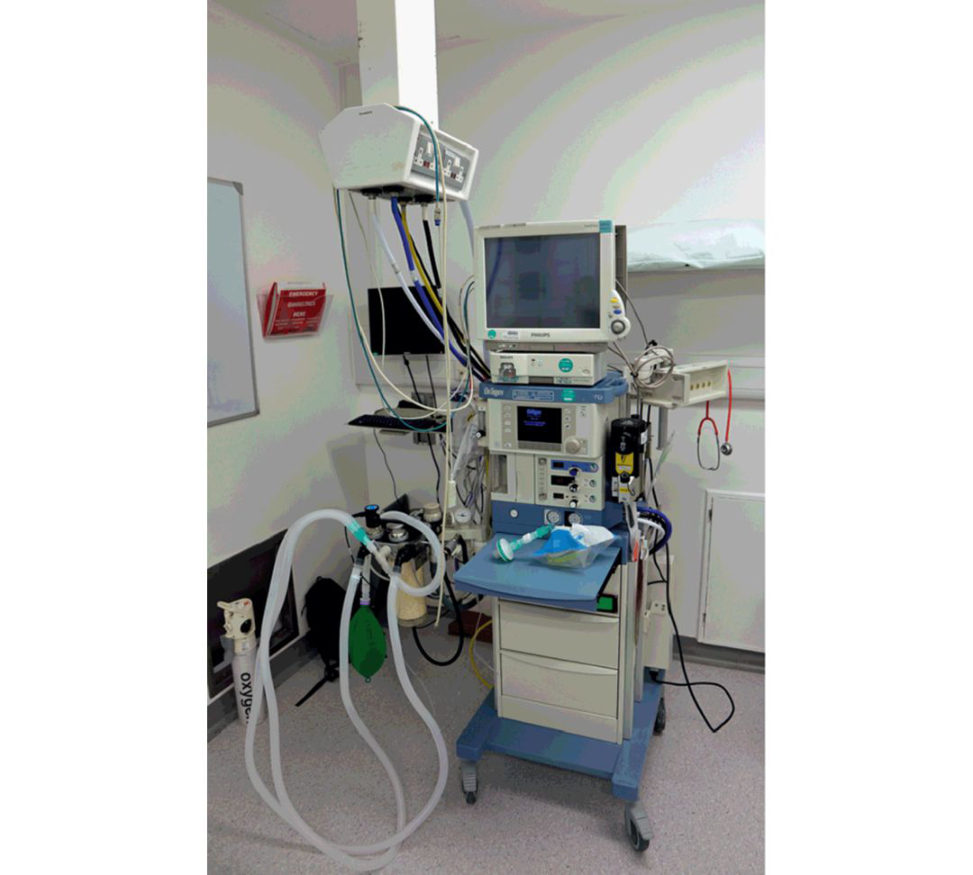
Figure 23.8 Anaesthesia gas machine.
What are the principles of general anaesthesia?
General anaesthesia encompasses the triad of analgesia, amnesia and muscle relaxation.
What else?
General anaesthetic agents act in the CNS to bring about a reversible loss of consciousness.
What drugs are used?
The three main classes of drugs used for GAs are intravenous induction agents, inhalation induction agents and muscle relaxants.
Do you know which intravenous agents are most useful incertain situations ( Table 23.4)?
Propofol is mainly used in day case anaesthesia. Thiopentone has fallen out of favour because it can cause significant bronchospasm and severe extravasation injuries. Etomidate is a short-acting intravenous anaesthetic agent historically used for short procedures, such as reduction of dislocated joints.
You mentioned halothane as an inhalation agent, but what is the problem with using it?
It can cause hepatis and as such is rarely used these days. Around 1 in 50,000 can develop a severe life-threatening hepatis.
Why do we use muscle relaxants as part of a GA?
Neuromuscular blocking agents is another way to refer to muscle relaxants. Muscle relaxants target the neuromuscular junction (NMJ).
How do muscle relaxants workTable 23.5)?
There are two types of muscle relaxants. 1. Non-depolarizing. 2. Depolarizing. Non-depolarizing agents competiv ely blockthe binding of acetylcholine (ACh) to nicotinic receptors at the post-synaptic membrane. No endplate potential is generated with paralysis of theaffected skeletal muscles. The second phase involvesa desensitizing phase in which the muscle is no longer responsive to neuromuscular transmift er released by the motor neurons.
How are muscle relaxants reversed?
At the end of the procedure muscle relaxants can be rapidly ‘reversed’ with the use of neostigmine, which has a plasma halflife of 60 minutes, longer than all the commonly used muscle relaxants. Adjuncts to anaesthesia include anft-eme tics, which aim to reduce the incidence of postoperative nausea and vomiting. Table 23.3 Intravenous induction agents.
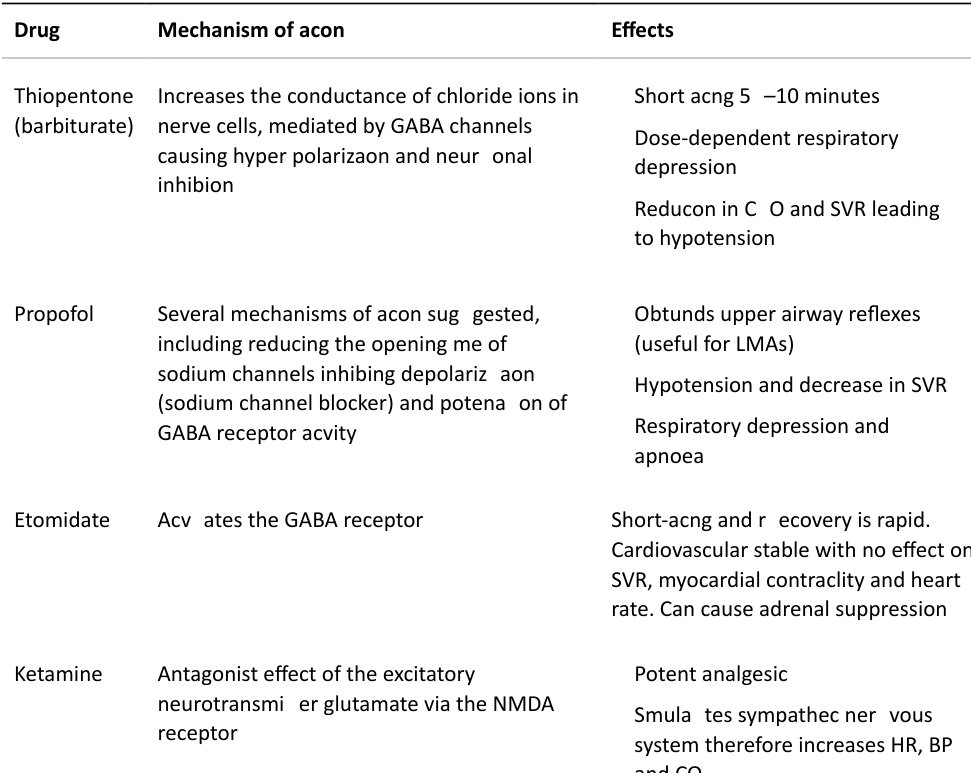
BP, blood pressure, CO, HR, LMA, NMDA, SVR, systemic vascular resistance.
Table 23.4 Inhalation agents.
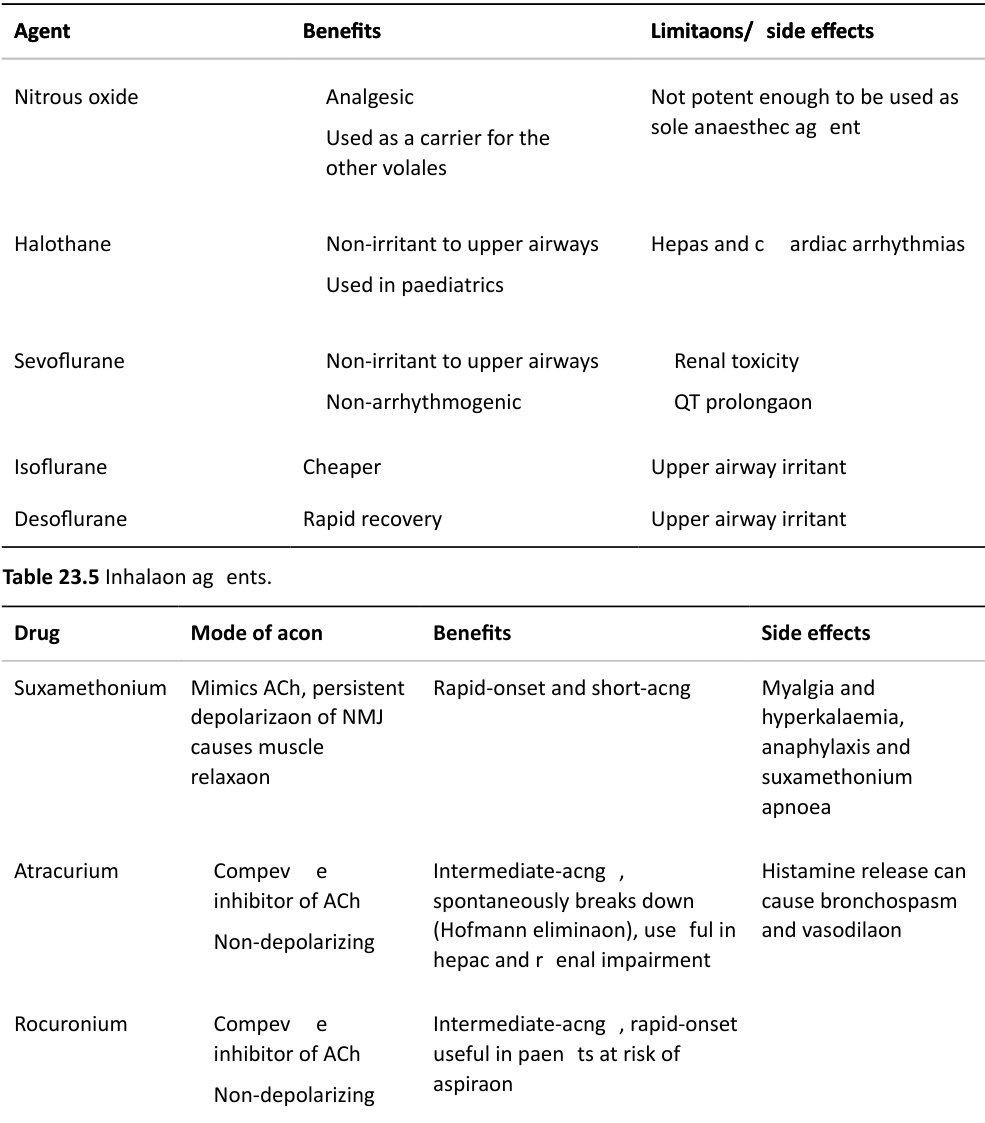
ACh, acetylcholine; NMJ, neuromuscular junction.
Analgesia
are different to those used in non-anaesthetiz ed patients These often have a very quick onset of action – alfentanil.
Remifentanil has a very short half-life, which is the same even after many hours of receiving the infusion.
In the doses anaesthetists give, these can have a potent respiratory depressant effect (as do most other anaesthetic agents).
Have you heard of total intravenous anaesthesia (TIVA)?
TIVA has been used for many years as an alternative to inhalational anaesthesia. When you wish to avoid muscle relaxant drugs due to certain neurological diseases. When you wish to avoid muscle relaxants for endotracheal intubation. This can be done with infusions of propofol and remifentanil, or with boluses of propofol and alfentanil/fentanyl.
What do you understand by the term regional anaesthesia? CANDIDATE 1: With regional anaesthesia you are rendering a specific area of the body, e.g. foot, arm, insensate to the stimulus of surgery or other instrumentation. What types of regional anaesthesia do you know? CANDIDATE 1: Radial nerve block, brachial plexus block, epidural and spinal anaesthesia.
Scoring 5/6. CANDIDATE 2: Regional anaesthesia involves infiltration of local anaesthetic to block sensory and motor nerves. Regional anaesthesia makes the operative site insensate and provides peri- and postoperative pain relief.
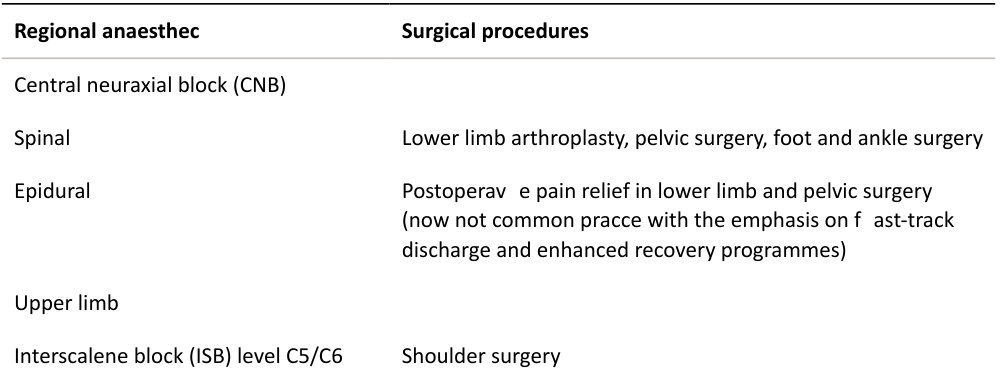
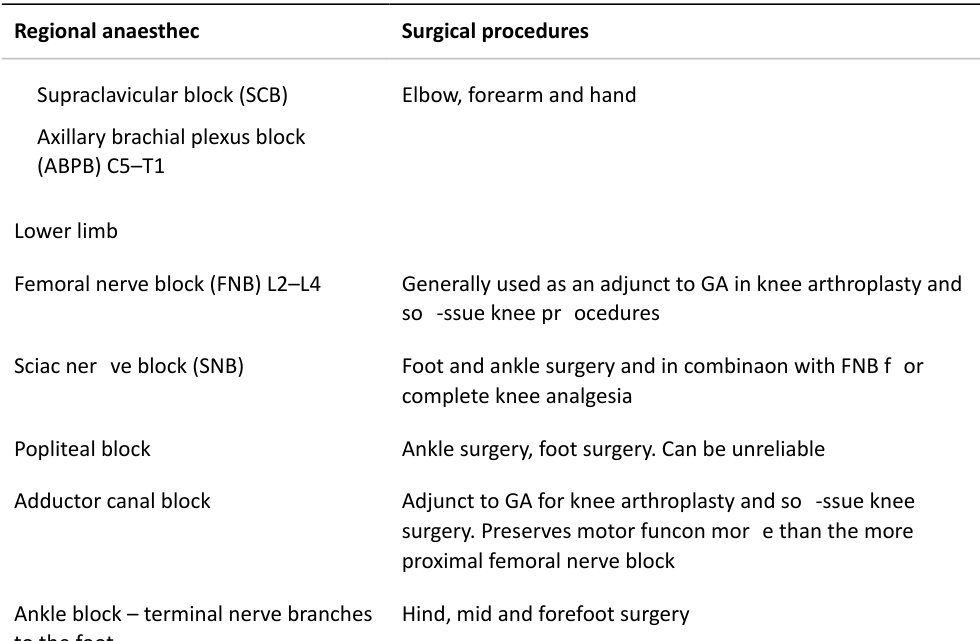
What types of regional anaesthetic are used in orthopaedic surgery (Table 23.6)?
A peripheral nerve block involves injecting local anaesthetic near the course of a named nerve. The advantages are that a relatively small dose of local anaesthetic can cover a large area with rapid onset of action Disadvantages include that it is technically challenging. It is technically easy (LP technique) with a high success rate and rapid onset of action Disadvantages include a ‘high spinal’, hypotension due to sympathetic block and postdural headache. Disadvantages include postdural puncture headache if the epidural needle is accidentally advanced through the dura, toxicity of doses intended for the epidural space injected into the subarachnoid space as well as higher failure rates than for performing spinal anaesthesia. Complications of an y regional anaesthetic include bleeding , infection nerve damage and local anaesthetic systemic toxicity (LAST). Good score 6, possibly 7. Table 23.6 Types of regional anaesthetic used in orthopaedic surgery.